KI in der Medizin, Internationale Perspektive
KI in der Medizin: John D. Halamka, Präsident Mayo Clinic Platform, über Daten, Prävention und Regulierung
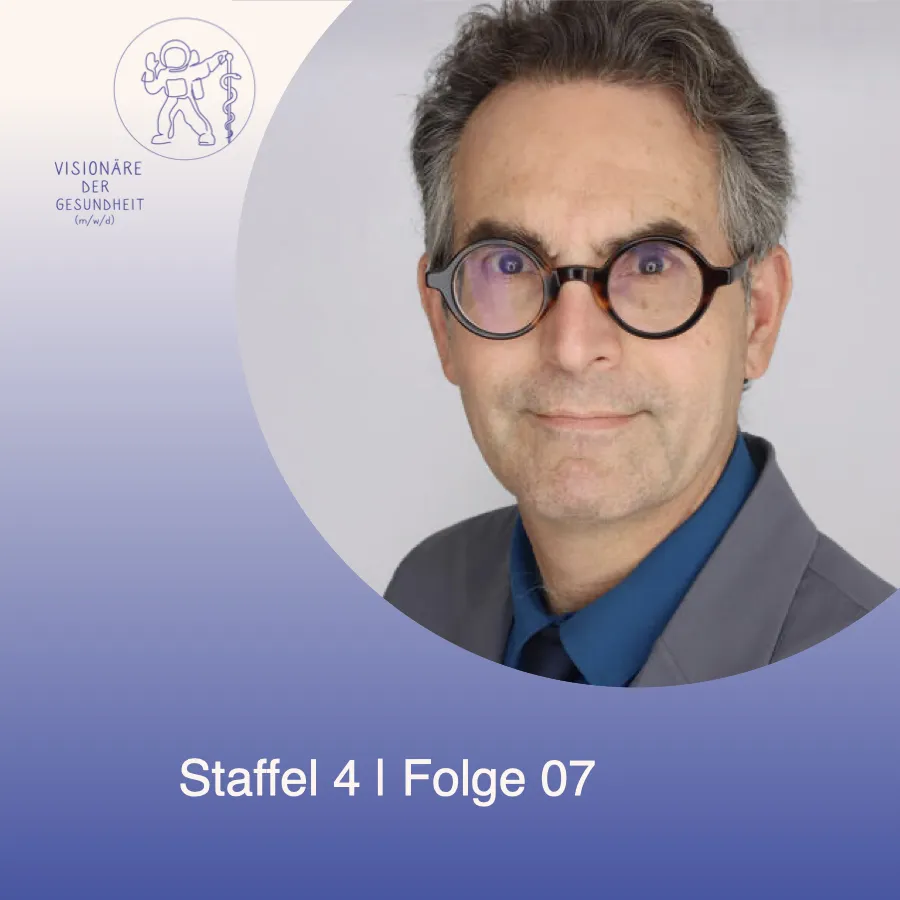
John D. Halamka ist Präsident der Mayo Clinic Platform und hat nach eigenen Angaben unter drei US-Präsidenten gearbeitet sowie in mehr als 40 Ländern digitale Strategien im Gesundheitswesen mitgestaltet. In Folge 133 von Visionäre der Gesundheit fragt Inga Bergen, Expertin für KI und Digital Health und eine der führenden Stimmen für die Zukunft des Gesundheitswesens, wie Daten und KI Medizin vorbeugender und individueller machen. Halamka erklärt, warum sich aus unstrukturierten Arztnotizen Erkenntnisse gewinnen lassen, etwa der Geruchs- und Geschmacksverlust als Hinweis auf COVID. Er beschreibt, wie ein föderiertes Netz de-identifizierter Datenbanken Verzerrungen verringert. Zudem berichtet er, dass Mayo 30.000 Patient:innen zu Hause behandelte, bei gleicher Qualität und halben Kosten.


Warum das Thema wichtig ist

Es gibt kein Nullrisiko. Es gibt Risiko, das man mindert, aber wenn man sich verändern will, muss man akzeptieren, dass es ein geringes Maß an Risiko geben wird.
Die Alterung der Gesellschaft trifft auf niedrige Geburtenraten, und damit wird es in den kommenden Jahren nicht genug Ärztinnen und Ärzte geben, um eine wachsende Zahl älterer Menschen zu versorgen. Das Gespräch zwischen Inga Bergen und John D. Halamka stellt die Frage, ob sich Fachkräfte mit KI so skalieren lassen, dass Versorgung früher, vorbeugender und zugleich bezahlbar wird, und welche Voraussetzungen dafür fehlen: eine Cloud-Infrastruktur, der Umgang mit Restrisiken, Testlabore für Digital-Health-Produkte und internationale Datenkooperationen, die Verzerrungen verringern, ohne gegen die DSGVO zu verstoßen. Relevant ist die Folge für Klinikleitungen, die über Krankenhausstrukturen und stationäre Versorgung entscheiden, für Kostenträger, Regulierer und Gesundheitspolitik, für HealthTech-Gründerinnen und Gründer sowie für Ärztinnen und Ärzte, die mit der ePA und deren Datenqualität arbeiten. Inga Bergen, Expertin für KI und Digital Health und eine der führenden Stimmen für die Zukunft des Gesundheitswesens, ordnet im Gespräch ein, was sich in Deutschland schon heute mit vorhandenen Daten und Regeln umsetzen lässt, statt auf den großen Systemumbau zu warten.
key take aways
Zentrale Erkenntnisse
Die Mayo Clinic Platform umfasst Daten von 10 Millionen Patienten, mit Partnern bis Ende 2024 etwa 100 Millionen.
Weltweit existieren rund 2 Milliarden digitale Patientenakten.
KI-Analyse unstrukturierter Arztnotizen identifizierte im März 2020 Geruchs- und Geschmacksverlust als stärksten Hinweis auf einen positiven COVID-Test.
Mayo Clinic hat seit Juli 2020 von Jacksonville aus 30.000 Patienten im Hospital-at-Home-Modell entlassen.
Die Coalition for Health AI vereint 1.200 Unternehmen und Regierungen für Leitlinien zu sicherer KI.
Die Gastgeberin

Inga Bergen
Expertin für Digital Health & AI I Moderator | Founder | Angel Investor
"Visionäre der Gesundheit " Gründerin Inga Bergen ist eine der promintesten Stimmen für eine menschzentrierte Digitalisierung des Gesundheitswesens. Seit 15+ Jahren an der Schnittstelle von Technologie, Medizin und Gesellschaft. Im erfolgreichen Podcast und Newsletter "Visionäre der Gesundheit" ordnet Inga die digitale und KI-Transformation des Gesundheitswesens ein.


Der Podcast
Visionäre der Gesundheit
VdR - einer der meistgehörten Health-Podcasts in Deutschland mit über 1 Mio. Streams. Wir sprechen mit Ärzt:innen, Unternehmer:innen, Forscher:innen und Entscheider:innen über Innovationen, digitale Transformation, interkulturelle Medizin und die Zukunft der Versorgung. In über 170 Folgen, beleuchtet Inga Bergen mit ihren Gästen, Perspektiven, die Mut machen – und zeigt, wie Wandel im Gesundheitswesen wirklich gelingt.
Episoden BESCHREIBUNG
Von der Prävention bis zum KI-Arzt: John D. Halamka von der Mayo Clinic Platform über die Zukunft der Medizin
Inga Bergen, Expertin für KI und digitale Gesundheit und eine der führenden Stimmen für die Zukunft des Gesundheitswesens, begrüßt in dieser Folge von „Visionäre der Gesundheit“ den Mediziner und Ingenieur John D. Halamka. Er ist Präsident der Mayo Clinic Platform, hat drei US-Regierungen beraten und in mehr als 40 Ländern an digitalen Strategien mitgewirkt. Inga Bergen hat ihn eingeladen, weil in Deutschland noch darüber gestritten wird, ob sich die elektronische Patientenakte überhaupt sinnvoll auswerten lässt. Halamka bringt dazu Erfahrung aus der Praxis mit: Daten von Millionen Menschen, Dutzende KI-Modelle im Einsatz und ein Blick auf Regulierung, Kultur und Technik zugleich.
Wie kann KI unstrukturierte Gesundheitsdaten wie Arztbriefe und PDFs nutzbar machen?
KI kann Freitexte, Notizen und sogar PDF-Dokumente auslesen und daraus medizinische Erkenntnisse gewinnen, ohne dass die Daten vorher mühsam in feste Formulare gepresst werden müssen. Halamka schätzt, dass der größte Teil der relevanten Informationen genau in diesen Texten steckt, etwa in Beschwerden, Symptomen und Behandlungswünschen.
Als Beispiel nennt er den Beginn der Corona-Pandemie im März 2020. Am Mayo Clinic analysierte eine KI Millionen Patientennotizen und fand heraus, dass der Verlust von Geruchs- und Geschmackssinn die Beschwerde war, die am stärksten auf einen positiven Test hindeutete. Für Inga Bergen ist das ein ermutigendes Signal für die deutsche Debatte über die elektronische Patientenakte.
Wie lassen sich Verzerrungen in KI-Modellen vermeiden?
Verzerrungen lassen sich nur reduzieren, wenn Daten aus unterschiedlichen Ländern und Bevölkerungsgruppen einfließen. Halamka beschreibt Datenqualität über drei Merkmale: Tiefe bedeutet die Vielfalt der Datenarten, Breite die Zahl der Patientinnen und Patienten, und Streuung die Unterschiedlichkeit der Menschen in den Datensätzen.
Eine zentrale Riesendatenbank hält er politisch für nicht umsetzbar. Stattdessen plädiert er für einen Verbund gleichgesinnter Länder, in dem jede Nation ihre eigenen, de-identifizierten Daten verwaltet und alle gegenseitig darauf zugreifen dürfen. Schon heute sei außerdem ein DSGVO-konformer Weg möglich: Ein in den USA entwickelter Algorithmus wird an Partner in Berlin geschickt, dort an deutschen Patienten getestet, und nur das Ergebnis geht zurück.
Wie sieht personalisierte Prävention am Beispiel Brustkrebs aus?
Personalisierte Prävention bedeutet, dass ein Algorithmus aus Genom, Vorerkrankungen, Lebensstil und Wohnort das individuelle Erkrankungsrisiko berechnet und die betroffene Person anschließend selbst über das Vorgehen entscheidet. Halamka erzählt von seiner Frau, die 2011 an Brustkrebs erkrankte und für die es damals nur ein allgemeines Behandlungsprotokoll für Frauen gab.
Heute gibt es am Mayo Clinic einen Vorhersagealgorithmus, der Jahre im Voraus warnen kann. Eine vorbeugende Medikation würde zwar Nebenwirkungen wie Wechseljahrsbeschwerden auslösen, könnte aber die Erkrankung verhindern. Seine Frau hätte sich im Rückblick klar dafür entschieden. Für Halamka widerlegt das die Annahme, Menschen seien an Vorsorge nicht interessiert. Entscheidend sei, sie mit ihren Werten und Vorlieben abzuholen.
Was ist mit einem persönlichen KI-Arzt für jeden Menschen gemeint?
Gemeint ist ein digitaler Begleiter, der Menschen ein Leben lang mit medizinischen Hinweisen unterstützt. Halamka hält es für denkbar, dass in etwa fünf Jahren jedes Neugeborene sequenziert wird und einen KI-Arzt sowie einen KI-Tutor erhält. Er selbst kennt sein Erkrankungsrisiko seit Jahren durch seine Genomdaten und richtet seinen Lebensstil danach aus.
Praktische Beispiele sind eine App, die allein anhand der Smartphone-Nutzung Hinweise auf Angst oder Depression erkennt, oder ein Assistent, der seiner Mutter mit Glutenunverträglichkeit sagt, welche Lebensmittel sie meiden sollte. Wichtig ist ihm, dass die Technik einfach bleibt. Eine Anekdote über einen obdachlosen Patienten zeigt, dass nicht jeder Wearables nutzt, und manchmal bleibt der Mensch die beste Schnittstelle, unterstützt durch KI.
Wie funktioniert Krankenhausversorgung zu Hause und was bringt sie?
Schwer kranke Menschen können mit Telemonitoring, Pflegebesuchen und einer zentralen Leitstelle sicher zu Hause behandelt werden. Am Mayo Clinic entstand diese Leitstelle in Jacksonville im Sommer 2020, weil in der Pandemie die Betten fehlten. Man startete mit einer einzigen Patientin und steigerte die Zahl schrittweise auf bislang 30.000 entlassene Menschen.
Laut Halamka sind Sicherheit und Behandlungsergebnisse vergleichbar, die Kosten liegen bei der Hälfte, und die Zufriedenheit ist hoch. Krankenhausinfektionen gibt es im Wohnzimmer praktisch nicht. Dieses Modell trägt sich wirtschaftlich, deshalb rechnet er damit, dass die zunächst befristete US-Erstattung dauerhaft bleibt. Ergänzend beschreibt er einen Algorithmus, der aus Blutwerten über Jahre hinweg frühe Anzeichen von Darmkrebs erkennt und so knappe Ressourcen auf die Menschen mit dem höchsten Risiko lenkt.
Wie können Regulierung und Cloud Innovationen im Gesundheitswesen beschleunigen?
Innovationen kommen schneller bei den Menschen an, wenn unabhängige Testlabore Produkte prüfen und ein Register ihre Eignung und Wirksamkeit transparent macht. Halamka verweist auf lange Wartezeiten bei den Benannten Stellen für Medizinprodukte in Europa und wünscht sich ein Netz, das Start-ups wie Konzerne zügig auf Fairness, Sicherheit und Nutzen prüft.
Der deutschen Politik empfiehlt er außerdem den Weg in die Cloud, um Daten, Entwickler und Versorger sicher zusammenzubringen. Ein Beispiel für Zusammenarbeit ist die Coalition for Health AI, die aus einer Handvoll Initiatoren auf rund 1.200 Unternehmen und Institutionen gewachsen ist. Sie erarbeitet Leitplanken für den sicheren KI-Einsatz und wirkt in den USA auf die politische Agenda ein.
Was sollten junge Menschen lernen, die im Gesundheitswesen arbeiten wollen?
Junge Menschen sollten an den Schnittstellen mehrerer Fachgebiete arbeiten und sich nicht nur auf formale Bildung verlassen. Halamka rät, früh praktisch zu werden, wie er selbst es mit einer Firmengründung im Alter von 18 Jahren tat. Online-Kurse, Plattformen wie Khan Academy und eigene Experimente mit generativer KI bieten dafür fast kostenlos den Einstieg.
Scheitern gehört für ihn dazu, denn die meisten Start-ups scheitern, und trotzdem führt irgendein Versuch zum Erfolg. Als Symbol für sein Denken dienen ihm zwei Uhren in seinem Büro: ein modular gebautes Frühwerk aus der Zeit der späteren IBM und ein handgefertigtes Unikat von Paul Revere, das sich nicht weiterentwickeln lässt. Modularität und Offenheit gelten ihm als Schlüssel. Sein Fazit: Wer das eigene Ego zurückstellt und Anerkennung breit verteilt, bewegt mehr, und wirklich stolz ist er auf Menschen, deren Weg er mit einem Anstoß verändern konnte.
Im Gespräch mit

TRANSKRIPT
00:14
Inga Bergen
Was haben Star Trek, Notaufnahmen und künstliche Intelligenz gemeinsam? Unser heutiger Gast John D. Hallamka ist Präsident der Mayo Clinic Platform, einer der spannendsten Vordenker Wenn es um digitale Innovation im Gesundheitswesen geht. Er hat unter 3 US-Präsidenten gearbeitet, in über 40 Ländern digitale Strategien mitgestaltet. Und jetzt ist er bei uns im Podcast. Wir sprechen über KI, Daten, Science-Fiction und echte Fortschritte in der Medizin. Neugierig? Dann unbedingt reinhören. Es lohnt sich. Welcome to the Visionaries of Healthcare Podcast. I'm very excited about my guest today. It is John Halamka from the Mayo Clinic. I have been reading his blog, The Geek Doctor, since, yeah, since it was published, I think, for the first time. And I'm very excited we can talk today.
01:10
John D. Halamka
Well, hey, thrilled to be here. And as you say, the most important thing we can do is mentor those who will replace us. So doing podcasts and sharing our experience, everything we did right and everything we did wrong, is really important.
01:23
Inga Bergen
You are a doctor by training, a medical doctor by training, and very early in your career saw the opportunity of using digitalization to improve care, to improve medicine, to improve healthcare. So let's jump into that. How have you become really the person, this visionary key opinion leader driver of so many things that you are today? When we mentor those who replace us. So this is the first thing I would like to learn.
01:55
John D. Halamka
Well, sure. So I would encourage all of your listeners to work at the margins of multiple specialties, right? So in medicine, in the 1980s, when I suggested, I think I want to work on engineering, computer science, the capacity to gather human telemetry, analyze it, and do diagnosis. Everyone said, "That's insane. Now, why would a doctor be an engineer?" And of course, this is where innovation happens. It's taking engineering principles, applying them to medicine, medical principles, apply them to engineering, work at the margins, work at the intersection of multiple specialties, and that's where the magic happens.
02:39
Inga Bergen
And today you are driving the Mayo Clinic platform, and I looked into that a little bit deeper for the preparation of this podcast, and it is super remarkable how much patient data you gather and make usable today. So I would say, from what you described, today you are really at the peak of your career making this happen, using really data and this mix between health and engineering to improve healthcare.
03:08
John D. Halamka
Well, so remember that AI is an overnight revolution. 50 years in the making. I have been working on this for 50 years, but you have to understand much of that, let's say 45 of it, was laying a foundation, right? Can't build a house without a foundation. So 40 years ago, we didn't have digital records. We had paper-based records. So you had to transform society to start gathering digital data about patients. Then you had to gather standards-based data so that you'd have actually the ability to analyze it, curate it, put it in forms that would be at country scale and bring together clinical records, registry records, research data. And, and so I've served now 3 presidential administrations in the US, but also more than 40 countries around the world, helping them digitize healthcare, standardize healthcare, and revise regulation to be, let's just say, protective of the data, and of course, always putting the patient first, but also to enable innovation. And in speaking with a number of German leaders in the last few weeks, I've suggested, for example, there's no such thing as zero risk. There is risk that you mitigate, but you have to, if you're going to change, accept that there will be some minor amount of risk. So as you point out, with a foundation laid, now we have the data and we have the regulation and we have a cultural imperative. COVID, for example, really forced us to change a lot of the way we work that enables us to create novel AI models and innovations to great scale.
05:00
Inga Bergen
So interesting that you say that because it's more like a triangle. It's technical innovation, it's medical innovation, but it's also the policy and cultural innovation that we need in order to make data usable. So now, for example, at the Mayo Clinic, so much data, you have data of 10 million patients in all kinds of areas. And what kind of your vision that you developed early on in your career is now true? I mean, what kind of use cases can you make happen today that you were just dreaming of maybe 50 years ago when you started with that journey?
05:38
John D. Halamka
Well, sure. So I mean, we can take so many clinical examples. We'll start with a few. So my wife in December of 2011 was diagnosed with stage 3A breast cancer. She's fine today. And back in 2011, I said, well, my wife is Korean. My wife is an artist. My wife has a thyroid condition. What's the cancer protocol to use on Korean 50-year-old women with thyroid problems? And the cancer doctors, some of the best cancer doctors in the world in Boston, said, we have a protocol for women. Mm-hmm. Okay. Well, that doesn't sound sufficient. I mean, There's a lot of different kinds of women on the planet Earth. Well, we're now to the point where just now— that was 2011, 2023, 2024— where, okay, Mayo has 10 million patients, but we've also a partnership with Mercy that brought 15 million patients. We've a partnership with Sheba that brought Israeli patients, a partnership with Canada and Brazil, and we're developing partnerships with Singapore. Republic of Korea, Denmark, the UK. So by the end of 2024, it'll be more like 100 million patients. And then as we actually look at digital, uh, records in the world, currently there are about 2 billion digital patient records in the world. So now what if you could develop an AI model that said, we're going to look at 2 billion journeys and we're gonna develop a cancer treatment protocol based on people like you. That's a very different kind of vision to proactive early discovery and diagnosis and empathetic medical care. And we're there. This is, we're already starting to see at Mayo 180 AI models developed based on millions of patient journeys of the past.
07:39
Inga Bergen
So there are two things into that development that I would like to dive in a little bit. The first one is that now we can use AI to structure data. So we don't have the problem that we had for decades that the quality of the data, the structure of the data was just not, it was just not capable actually for AI models or any algorithms in the past to use them. And we needed to structure the data and this is not anymore. We can use AI to structure all kinds of data. We can even have data in PDFs, right?
08:17
John D. Halamka
Well, and so let's talk through that. So in the past, people said data must be put into a predefined structure of problems and meds and allergies and notes. I mean, all fine, but I would argue that 80% of the insights are in the text, which is what was the patient sign symptoms? What was the patient complaint? What are the patient care preferences? And as exactly you point out, in the past, we didn't have the tool to extract that sentiment, that journey, that detail from the text, and we do today. So I'll give you a quick example, just so your listeners understand some way we've used this practically. It was March of 2020. Remember back then? It was about 15 years ago, uh, it feels. March of 2020, and we asked the question, I wonder what patient complaint would most predict a positive COVID test? Is it fever, sore throat, muscle aches? Well, none of that signs and symptoms data was recorded in any kind of structured fashion. So we used AI to read millions of patient notes, and it said, you know, this is gonna sound very strange, but it's loss of smell and taste that seems to be the chief complaint that results in a positive COVID test. That was discovered at Mayo Clinic by looking at unstructured text data with AI. It's exactly the kind of insight you can find.
09:59
Inga Bergen
Yeah, that's super interesting. And this gives me hope because I'm obviously German, and in Germany we talk about the electronic patient record since forever, and now we will get one that will use PDF. And the common discussion is mostly that we will not be able to use the data, which is not true, obviously. The second development I would like to dive into is this segmentation of patients because we come from a healthcare system that talks about the patient, and I have been building like 12 years ago, I have been building lots of digital tools for preventative care. And then I heard doctors saying all the time, my patients are not interested in prevention. And I swallowed this for, you know, some time. And then at some point I thought, my patients, can you really say that? Because there are so many different people. And if you talk about your wife and her experience and what can be offered to her. It shows that through digitalization, we have to come to a point where medicine treats patients differently and we segment patients. So I would love to learn your experience and your thoughts on that because it will transform everything in medicine, right?
11:14
John D. Halamka
Well, sure. So at Mayo, we've developed a breast cancer prediction algorithm, and that is not a breast cancer diagnosis algorithm. We have those too, but a prediction algorithm that takes into account who you are, and that is your genome, the diseases you have, the demographics you have, the lifestyle you lead, the geography you live, and predicts the likelihood of breast cancer. So I asked my wife the following question. You were diagnosed with breast cancer at 50. What if at age 45, an algorithm that has a positive predictive value of 90%, right? It's not perfect, right? 10% of the time it's wrong, but say 90% of the time it's right. And it says, "Oh, 5 years from now, you're gonna likely develop breast cancer. You know, we could put you on a medication today, tamoxifen. It will actually prevent breast cancer, but it will cause a lot of side effects because it will cause a chemical menopause. You're gonna have fatigue and muscle soreness, muscle cramping, maybe less sleep. What are your values? Would you like, at age 45, with a 90% certainty, to have signs and symptoms of early menopause but never get breast cancer, or wait 5 years and see what happens? And I— my wife said, in retrospect, if I would have been given that decision, I would have absolutely gone with the 45-year-old preventative treatment rather than having radiation, chemotherapy, surgery, and potentially loss of life due to breast cancer. So how about this? Meet the patient at their level of expectation and preference. But I think it is not true that all patients wait till they're sick for treatment and don't like prevention.
13:12
Inga Bergen
Yeah, this is also super interesting because it will require a certain level of, an eye-to-eye level in communication, transparency, using this data as a transparency tool to foster communication and decision-making on the patient side, which is also really transformative, I would think, also for the medical personnel. And I mean, you teach a lot of people from medical students to international policymakers. What kind of key messages do you have for them? What is the role in the future and how does this profession also have to change?
13:51
John D. Halamka
So if you look at medical care in 2023, and I don't mean any specific society, it's— I'm not talking about the US or Germany or the Nordics, just medical care in general is late stage, invasive, inconvenient, poorly coordinated, expensive. Wouldn't we all want medical care that was early stage, convenient, preventative, less painful, less expensive? And if we look at our birth rates, and again, I'm not pointing at any one country, look at all industrialized countries, the birth rates, 1.4, 1.5, But we're all living to 80 or 90. There will not be enough doctors to service those who are elderly. So wouldn't you want the benefit of technology to scale our existing clinicians to help get the patients first to avoid disease? But if there is disease, see the right patient at the right time in the right place with the right expert a valuable resource, specialists have to be scaled with AI.
15:06
Inga Bergen
When you look at the future of health record innovation, that would be something that starts very early on because now we have a generation that is basically growing up with all these variables and tracking devices. And even just using a smartphone can gather key findings about your health. Probably what you described with these findings that you had with the loss of taste and loss of smell that we can just extract from just smartphones that people use. So the health record of the future would be something really different than what we understand of it today.
15:46
John D. Halamka
Well, so absolutely. And I'm gonna give you a vision and then talk about some practical innovation. I believe in 5 years, let's just pick a number. Every baby should be sequenced at birth, and every baby should be given an AI doctor and an AI tutor that lives with them during their life. And this is not a far-fetched notion. I mean, right, I think in 2024 we'll actually have a lot of good enough generative AI products that will actually help to give lifetime medical advice. Mayo is creating several of those. But in this way, I was the second human sequenced in the Genome Project. And so I have known for 15 years all my probabilities of disease, and therefore I know what lifestyle changes to make or what prevention or what testing to do. So again, you imagine this idea of, oh, I now understand based on your genome, your probability of disease, and I'm your AI doctor, I can say, you know, here are some things you can do that will make you not only live longer, but potentially have a higher quality of long life. To your point about the smartphone, some years ago, collaborators developed something called Mind Lamp, and Mind Lamp is an app you put on your phone that, with your permission, monitors how you use your phone. Well, how many Facebook, you know, likes did you do today? And how many social media posts did you make? And what we found, because we did a randomized controlled trial, is you can detect anxiety and depression purely from the way the phone is being used. So again, when you start to think— I don't mean this is like somebody watching you in an invasive way. This is, you agree that maybe I am a little concerned about my feelings of sadness, especially in the dark times of winter. I'm gonna enable my AI doctor to take a look at my phone use, not for my private data, but purely what am I doing with it? Oh my, it does appear you're having some mood changes. Would you like to speak with someone about that?
18:05
Inga Bergen
This is super interesting, especially when we look at, for example, virtual influencers that are now popping up everywhere in Asia, but also in Europe and the US. And then we can really think of this feeling of a human-to-human interaction with an AI doctor that is kind of a companion, like a health companion, and not somebody who shows up, you know, when there's really a need and people feel sick. So you would think of a kind of, yeah, companion that we have all our life and using data really to help people to stay healthy. So this would require a lot of willingness on the patient side or on the people side who are not patients. So we would need a new word for them as well. How would you call them? Just people? I don't know.
18:55
John D. Halamka
Well, exactly. I mean, instead of using the word patients, we're people. And but here's some examples. So my mom, who's 82, has a gluten intolerance. And I have really tried hard to teach her what has gluten and what does not, but she just doesn't have— doesn't remember. So again, you can imagine, oh, well, I have this AI doc in my pocket. Can I eat this? Oh no, that's got rye or barley. You know, you really shouldn't, right? I mean, these are simple things that we are often as people seeking guidance and having, you know, the simple tools that are available with technology today to keep us healthy is not science fiction. It's just science reality.
19:43
Inga Bergen
But what you describe would then be very easy to use. I mean, it will be seamlessly integrated into the daily life, which is not the case actually when we look at some digital tools today that are, especially when I look at the German market, that are very hard to use because there's like data protection and you need to sign up, very complicated. And this is not what you're thinking of because it probably doesn't really work with humans. It needs to be like super easy and like an interaction with a friend or somebody you know.
20:18
John D. Halamka
You must meet the patient at their level of technological sophistication and literacy and trust. And here's a quick example for you. Some years ago, a large tech company visited me in Boston and said, I would like to go to a Medicaid clinic where the uninsured or those who may not have, you know, social advantages are treated, because I would like to see how they are experiencing care. So these 4 engineers go to an elderly homeless person and say, what's your favorite wearable? And he said, Sucks, right? And this, like, you know, you can't say that every person is going to have a cool new digital watch or a cool new phone and is going to live their world of AI monitors because of the devices they wear, devices that they have in their environment. Meet the patient at their level of understanding and comfort. And that may very well be a human interaction. Augmented with AI decision-making so that the clinician can see the patient in a very efficient way.
21:29
Inga Bergen
What you predict, what we will see is a complete transformation of healthcare to a more preventative care. Also probably other outcome measurements because this is also, for example, what the Mayo Clinic platform advertises, that it is possible to really understand outcomes. Through patient data from the daily life, actually. So this will reshape all kinds of business models, also in healthcare.
22:00
John D. Halamka
Right. And here's an interesting question for you. German engineering is extraordinary. Wouldn't you like not just healthcare organizations, but entrepreneurs, small companies, and innovators to be able to create products and services to improve people's lives and have them almost frictionless and with appropriate safeguards to make sure they will do no harm, but available to people. And how do you do that? Well, in the US and of course Europe's asking the same question with both the European Health Data Space and the European AI Law and the, you know, mobile or medical device regulations. But imagine this, that we have a nationwide network of testing laboratories, and those testing laboratories can take any entrepreneur's, any innovator's product and run it through a rigorous set of tests to assess, is it fair, appropriate, valid, effective, and safe? And this is not just a regulatory kind of thing. This is actually a testing lab that says, yes, actually, this is probably fit for purpose. It's probably going to help you. And then imagine a nationwide or global registry that says, oh, here are the products, some from large companies, some from startups, and here's who they work for, and here's what they do, and here's how effective they are. And that becomes a way of really reducing the friction to getting these kinds of things incorporated in your life.
23:37
Inga Bergen
Yeah, so we definitely need new ways of not only regulation, but also then putting this regulation into practice. Because now if you talk about medical device regulation, for example, in Europe you wait actually for a year to get an appointment because the notified bodies, they are just so overwhelmed by all this innovation that they, in some cases, they try their best, but but they just, I would say, don't have the tools in many cases to really deal with this kind of innovation. So also on that side, I mean, you're doing a lot, you're consulting policymakers all over the world, also in Germany. So you say we need new tools that also help us to make innovation accessible much quicker and, and faster than today. And how could we do that possibly?
24:28
John D. Halamka
Right. Well, and so again, I am not advocating for any company or for any, you know, any conflict of interest here. But here's what I've told Karl Lauterbach and his staff. You must embrace the cloud. And that is if you're going to build an ecosystem of innovators looking at de-identified, privacy-protected data, creating and validating products and services and making available to all people. You can't do that from a machine locked away in a warehouse somewhere. What you need is to say, oh, we're going to create a virtuous, secure ecosystem, bringing together data that's de-identified, right, all with consent and appropriate, you know, patient approval, innovators, and healthcare delivery organizations, which could be Doctors and hospitals, or could be pharmacies, or could be patient advocacy groups, could be any of them. You need to bring all three together with a cloud that links the three. And I have had positive response from the German ministry about that idea. And, you know, again, I've sometimes found that Germany is risk-averse. Yes. But I think it's starting to change because there's a societal urgency. To change.
25:55
Inga Bergen
Yes, that's why I actually love crisis because it pushes us through change that we have to undergo. Otherwise, the crisis doesn't end. So I embrace the crisis and the German society has to as well when it comes to healthcare. But I would like to deep dive into one specific topic and that is data bias because that's also a topic when we think of a data-driven healthcare economy. And new concepts in healthcare. I mean, you described your wife as Korean, and I would think that if you take like data from Germany, somebody who has a background, a Korean background, would not, you know, be represented in the datasets that would be gathered in Germany. How do you deal with these kind of biases? How do you make sure that we don't, basically continue, you know, biases that exist in our societies?
27:00
John D. Halamka
Well, so let me answer this one in two ways. Well, I believe data has three characteristics, what I call depth, breadth, and spread. Depth is different kinds of data. Do you have behavioral health data? Do you have imaging data? Do you have telemetry data? That's Depth, breadth, number of patients that you have, but spread is the heterogeneity of those patients. Do you have Koreans? Do you have Germans? Do you have people from sub-Saharan Africa? And having done this for 50 years, building a giant centralized database will never work. It's just too politically difficult. Regulations across countries are so variable. So what one needs is a federation of like-minded countries that will de-identify their data and say, oh, we have a Korean database in Korea, a Swedish database in Sweden, a German database in Germany. That's great as long as there is reciprocity. Anybody in Sweden can use the database in Germany and Germany can use the database in Korea 'cause it's, again, privacy protected, de-identified, closely monitored with data use agreements. And that spread is the only way we're gonna develop algorithms that reduce bias.
28:28
Inga Bergen
So we would need a, I mean, you just briefly mentioned all these European regulations that pop up now that relate to how we use data, how we use AI. But what you say basically is that we need like an international framework like it is done in aviation, for example, for health data to use data because yeah, we would need that in order to offer something very personalized to every patient and worldwide.
29:02
John D. Halamka
But let me tell you how I could do something today, today, that's GDPR compliant. So I have many collaborators in Berlin. And imagine that I have developed today a wonderful algorithm and it was developed in the United States. And I have no idea if it will work in a German population. So I just simply send the algorithm to my German collaborators. And say, "Test it in Germany on German patients and let me know if it works." I'm not asking them to send me data. I'm not asking to log into a German server, right? They're just gonna come back and say, "Oh, it did," or, "No, it didn't," right? And that's GDPR compliant today.
29:50
Inga Bergen
You are the man of the workarounds. And it's not helpful, that's what I understand from this answer, to really expect all these big major changes first and then to start with something, but rather look into what is possible today and then just find a creative way of how to make it happen. So that's what we need to push this whole process forward.
30:17
John D. Halamka
Well, absolutely. But look at history. Email, right? So email was a small lab in Massachusetts and a couple of folks decided to have electronic communication between each other inside a building. And they said, "Oh, but there's a building next door and they wanted to join too." Oh, oh, you know, then there's a place across the country. Oh, there's a place across the world, right? Email isn't a giant central database. It's people putting servers that do receiving and transmission of email and they do it in a fashion that starts small, thinks big and move fast. And now we can communicate with most anyone.
30:58
Inga Bergen
And you mentioned at the beginning of our conversation, you mentioned this cross-disciplinary collaboration that you basically represent as a person yourself. And that is also a question I have because from your experience, how do you foster such collaboration in really diverse, large teams? That need to solve all these problems, these urgent problems that we have in healthcare right now.
31:27
John D. Halamka
Let me give you a good example. So about 2 years ago, a couple of folks got together, about 6 people, and said, you know, I bet if AI becomes an important part of society, we better have some guidelines and guardrails to make sure it does no harm. And then that was September. And then in October, we said, "Well, let's have a phone call." 90 companies joined that phone call. Then the federal government joined the phone call. Today, the Coalition for Health AI is 1,200 global companies and governments working together for free in a nonprofit, non-legal context to create the guidelines and guardrails for the safe and effective use of AI. So it's a movement, right? That is, it starts with just a few thought leaders and then people say, "Hey, I'd like to join that." And now, 1,200 companies working together shows you the power of coalitions.
32:31
Inga Bergen
I love that example because it shows you can create some FOMO, like fear of missing out, And then just a pull effect. And it's not about doing a regulation first and then threatening everybody into dealing with the topic. That would not be your recommendation, I suppose.
32:50
John D. Halamka
Well, right. But here's what's interesting because we now have this public-private partnership, this collaboration of the willing, we call it. When Joseph Biden signed the executive order for safe, secure, and trustworthy AI on October 30th, You'll see in that 111-page document, it mentions healthcare 33 times, and it mandates the federal government within 180 days to find a public-private partnership that will help guide AI for the future. Well, okay, we're ready.
33:28
Inga Bergen
As we speak, I realize actually that we are, I mean, I know this, but, but Speaking to you, I realize that we are really in a decade where transformation will happen, and we will find ourselves in a completely different healthcare system in a couple of years, with companies really doing things much differently than today. And also, as I mentioned briefly, business models really changing. And I mean, that is something also with your work at the Mayo Clinic, you want to help develop that we come to value-based healthcare, to more preventative care. I would like to dive into that a little bit more in detail. How do you think business models need to change in, in health?
34:19
John D. Halamka
Well, sure. And let me give you a case example from Mayo. Again, this is not to suggest any product or service to anyone. But during COVID, we all had a problem. Our hospitals were filled. We couldn't build more beds. So we had to ask the question, can we care for very sick people in their homes? Wow, that sounds revolutionary. I don't know, is it safe? Uh, how would you do that? So we built a command center in Jacksonville, Florida in July of 2020 and started with one patient. An 87-year-old woman with a serum sodium of 102. That's very bad. And we brought her back to health in her home through a combination of remote patient monitoring, nursing visits, putting some equipment in the home, protocols that we ran from our command center. And then we moved to 10 patients, then 100, then 1,000. As of today, we've discharged 30,000 patients from their homes and the safety, the quality and the outcomes are the same. The cost is half. The patient satisfaction extremely high. But here's an interesting side effect. How many hospital-acquired infections do you get in your living room? Zero. Right. So all the errors that we see in medicine, infections and falls didn't happen in the home. So, oh, we can deliver care at half the cost and better patient satisfaction with easier access. Why not? And in the United States, we have a regulatory change that has now a 2-year window of reimbursing hospital care in the home. And we believe actually after 2 years it's going to be continued indefinitely because the business model is so clear.
36:18
Inga Bergen
This is so interesting because this is a big discussion in Germany right now because we have so many hospitals and some of them are not really capable of financing themselves and nor they are of digital transformation at all because they're just too small. But it's a very, I would say, emotional discussion also on a local level. That hospitals might close because they're not needed anymore. So it's super interesting because we have all these arguments on the one hand side that really show there is better care possible with less hospitalization. And on the other hand, we have humans who want to do things in a way they always— how they always did them.
37:02
John D. Halamka
Well, let me give you another example of how things will change. So we've developed an algorithm that can look at your blood tests over the last couple of years of your life and all those blood tests may be completely normal, but the variation you see year to year can be predictive of a disease that is just beginning. So we've deployed this algorithm to a lot of community hospitals to do early detection of colon cancer. Mm-hmm. The algorithm is not perfect. No algorithm is perfect. But it can say, you know, of the 100,000 patients that are being seen, these 100 should have a colonoscopy this year because they look like they may be developing an early-stage colon cancer. And so, oh, well, that's pretty interesting. If you have limited societal resources, limited societal budgets, if you can figure out who needs to be seen now because of high likelihood of disease, then those societal resources will be used in the most efficient way possible.
38:08
Inga Bergen
Yes. So when we look at this whole landscape of change and opportunity, what would you recommend young people who want to work in healthcare? What do they need to learn? Because I don't know how it is in the US, but I would say education systems have a really hard time in adopting all this innovation and really making it educationable, kind of.
38:40
John D. Halamka
Yeah, I mean, so again, I look at my background. So sure, you know, I did my MD and my engineering degree and public policy and economics degrees, that sort of thing. But some of my most valuable experience was practical. And that is that I started a small company when I was 18. I built hardware, I built software, I spend endless hours on weekends just doing experiments. So it was outside of the formal education that I really learned much of what is practical and what I do today. So embrace opportunities. It's not just waiting for educational system to teach you Python. Go onto the web, go, go to Khan Academy, go try generative AI and see what works and what doesn't.
39:33
Inga Bergen
Yeah, and you can do it basically nearly for free with all these online courses. Like even on YouTube, you can actually get a lot of inspiration, or on podcasts. That's something I love.
39:46
John D. Halamka
So explore, take a risk, you know. Remember, 90% of all startups fail. It is completely fine to try a few things that go nowhere because something you try will go somewhere.
40:02
Inga Bergen
So, and since we come to the end of this podcast episode, I would like to ask you, what are you most proud of in your career? What is the one thing you helped developing or putting into practice that you you think is really the biggest achievement so far?
40:24
John D. Halamka
And so I'm going to give you a quizzical answer to that, which is, is that I travel the world, right? I have been in 7 countries in the last 10 days, and people will come up to me and say, "You don't remember, but 10 years ago I sent you an email and you said, 'Go look at this, go try that,' or, 'Here's an introduction,' and it changed my life." And so I guess it's not that I feel— I'm not a proud person. I mean, I just ask myself, did I make an impact or did I leave something behind? When young people fundamentally change their journey in life based on some nudge that I was able to provide or comment I made or introduction I made, that's extraordinary.
41:09
Inga Bergen
Yes, I totally resonate with that. You mentioned briefly in our conversation before we started recording that you have these two clocks standing in your office room at home. And can you tell again the story of the one clock or the two clocks basically?
41:28
John D. Halamka
So in my career, I have always been taught, do engineering in a modular way, right? Because technology will evolve fast. You wanna be able to pull out one module, put in another module. You'll be able to innovate and enhance that way. So I have one clock that was created by an engineer in 1905 using a variety of modular components from 1905, including a sewing machine motor. And that clock is self-winding. It's an old clock, but it actually is able to pull the weights up with this motor and wind itself. And the engineer called it the International Time Recording Company developed a variety of time recording devices, but then said this modular reusable innovation concept was so powerful, it should be expanded to different business machines. And he renamed the company International Business Machines, IBM. So one clock is Thomas J. Watson's prototype for his company IBM. The other clock, hand tooled by a silversmith, Every component completely custom made, not modular, not upgradable. Innovation completely impossible. That other clock is made by a gentleman named Paul Revere. You know, one if by land, two if by sea, the British are coming. So I keep these clocks in my office to illustrate the power of building innovation in a modular fashion. And thinking outside of the box, existing components that exist in society today, assembled in novel ways, can create breakthrough innovation.
43:11
Inga Bergen
And you said it's modular, replaceable, and upgradable. And this is everything you need, basically, to also integrate the second thing we can learn from you in the process, and that is to collaborate, to embrace new ideas. To enable people to participate and to be really open about that. And I have to say, I love that approach. It's a question I ask myself very often. How do you stay open? How do you stay open to new ideas? How do you embrace people who basically think in a completely different way? And this is also what comes along with that concept, right?
43:50
John D. Halamka
So remember, none of us can do this on our own. Mm-hmm. The only way we're going to innovate and change technology and policy and society is to do it together. And it's really important that if you give credit very broadly, it's not about you. It's about the change, the impact, the things you leave behind. Put your ego aside and focus on the change, and you'll find others will follow. And amazing things will happen.
44:24
Inga Bergen
Thank you so much, John, for this interview and for your time.
44:29
John D. Halamka
Well, absolutely. Always thrilled to help my colleagues in Europe.