Daten & Prävention, Internationale Perspektive
KI in der Krebsforschung: Nicolas Wolikow, Mitgründer und CEO von Cure51, über Exceptional Survivors
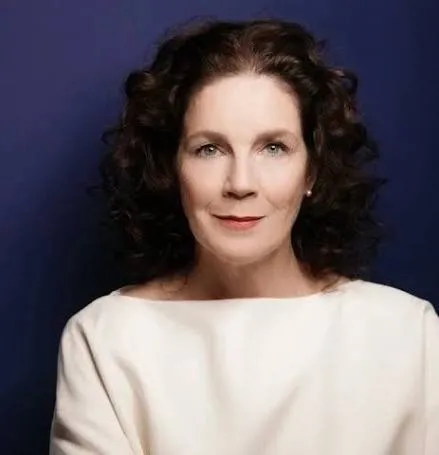
Nikola Wolikow ist Mitgründer und CEO von Cure51 und hat zuvor fast 20 Jahre in der Life-Science-Industrie in Startups, Big Pharma, Dienstleistungsunternehmen und der Medizintechnik gearbeitet. In Folge 141 von Visionäre der Gesundheit fragt Inga Bergen, Expertin für KI und Digital Health und eine der führenden Stimmen für die Zukunft des Gesundheitswesens, was sich aus Menschen lernen lässt, die aggressive Krebserkrankungen entgegen aller Prognosen überleben. Wolikow erklärt, warum Cure51 vom Überleben statt vom Sterben ausgeht und dafür Daten aus über 100 Kliniken auswertet. Er berichtet, dass die Überlebenden meist außergewöhnlich auf die Therapie ansprechen und bereits zwei Zielstrukturen an Organoiden bestätigt wurden. Außerdem betont er die kollektive Zusammenarbeit rivalisierender Kliniken. Das Gespräch verbindet Datenanalyse mit der Perspektive der Patientin und des Patienten Jan.


Warum das Thema wichtig ist

Anstatt auf Menschen zu schauen, die sterben, schauen wir auf Menschen, die überleben. Wir beginnen also am Ende.
Bei Bauchspeicheldrüsenkrebs, Glioblastom und kleinzelligem Lungenkrebs hat sich die Standardtherapie seit rund 30 Jahren kaum verändert, und die Überlebenschancen liegen nach später Diagnose bei wenigen Prozent. Das Gespräch zwischen Inga Bergen und Nikola Wolikow stellt die Frage, ob sich aus den wenigen Betroffenen, die trotzdem überleben, neue Wirkstoffe ableiten lassen, und was dafür nötig ist: einheitlich erhobene Daten aus Kliniken in 32 Ländern, Einzelzell- und Multiomics-Analysen, KI sowie die Bereitschaft konkurrierender Zentren, gemeinsam an einer Studie zu arbeiten. Relevant ist die Folge für Onkologinnen und Onkologen, Klinikleitungen und Ethikkommissionen, Pharma- und Biotech-Verantwortliche, HealthTech-Gründerinnen und Gründer sowie Patientenvertretungen, die wissen wollen, ob ein Forschungsmodell mit Gewinnbeteiligung der Kliniken die Entwicklung von Therapien verkürzen kann. Inga Bergen, Expertin für KI und Digital Health und eine der führenden Stimmen für die Zukunft des Gesundheitswesens, ordnet in „Visionäre der Gesundheit“ ein, wie sich ein Ansatz, der vom Überleben statt vom Sterben ausgeht, mit Datenqualität und kollektiver Zusammenarbeit umsetzen lässt.
key take aways
Zentrale Erkenntnisse
Cure51 untersucht Exceptional Survivors, Menschen, die aggressive Krebsarten gegen alle Prognosen überleben.
Nur 1 bis 2 Prozent der Patienten mit aggressiven Krebsarten gehören zu diesen Outliern.
Cure51 startet mit Bauchspeicheldrüsenkrebs, Glioblastom und kleinzelligem Lungenkrebs.
Ein Netzwerk aus mehr als 100 Kliniken in 32 Ländern liefert über 400 Datenpunkte pro Patient.
Zwei neue Targets bei Bauchspeicheldrüsenkrebs wurden in weniger als drei Monaten identifiziert und an Organoiden validiert.
Die Gastgeberin

Inga Bergen
Expertin für Digital Health & AI I Moderator | Founder | Angel Investor
"Visionäre der Gesundheit " Gründerin Inga Bergen ist eine der promintesten Stimmen für eine menschzentrierte Digitalisierung des Gesundheitswesens. Seit 15+ Jahren an der Schnittstelle von Technologie, Medizin und Gesellschaft. Im erfolgreichen Podcast und Newsletter "Visionäre der Gesundheit" ordnet Inga die digitale und KI-Transformation des Gesundheitswesens ein.


Der Podcast
Visionäre der Gesundheit
VdR - einer der meistgehörten Health-Podcasts in Deutschland mit über 1 Mio. Streams. Wir sprechen mit Ärzt:innen, Unternehmer:innen, Forscher:innen und Entscheider:innen über Innovationen, digitale Transformation, interkulturelle Medizin und die Zukunft der Versorgung. In über 170 Folgen, beleuchtet Inga Bergen mit ihren Gästen, Perspektiven, die Mut machen – und zeigt, wie Wandel im Gesundheitswesen wirklich gelingt.
Episoden BESCHREIBUNG
Warum überleben manche Menschen aggressiven Krebs? Nicolas Wolikow von Cure51 über Daten, KI und globale Zusammenarbeit
Inga Bergen, Expertin für KI und digitale Gesundheit und eine der führenden Stimmen für die Zukunft des Gesundheitswesens, begrüßt in "Visionäre der Gesundheit" diesmal Nicolas Wolikow, Mitgründer und CEO des Health-Tech-Unternehmens Cure51. Kennengelernt haben sich die beiden auf der VivaTech in Paris. Inga Bergen hat ihn eingeladen, weil sein Ansatz die übliche Logik der Krebsforschung umdreht. Statt zu untersuchen, woran Menschen sterben, fragt er, weshalb einige entgegen aller Prognosen leben. Diese Perspektive gewinnt zusätzlich an Gewicht, weil mit Jan eine Überlebende des Pankreaskarzinoms im Gespräch zu Wort kommt, die heute selbst im Team arbeitet.
Was erforscht Cure51 und warum stehen Überlebende im Mittelpunkt?
Cure51 sucht Menschen, die extrem aggressive Krebserkrankungen überlebt haben, obwohl die Statistik dagegen sprach, und analysiert ihre Biologie, um daraus neue Therapien abzuleiten. Wolikow nennt diese Betroffenen Outlier, also Ausreißer. Nur etwa ein bis zwei Prozent der Erkrankten gehören dazu.
Der Reiz des Ansatzes liegt darin, dass das Ergebnis bereits feststeht. Klassische Forschung beginnt mit Annahmen, die erst im Tiermodell und dann am Menschen geprüft werden, und scheitert häufig an Toxizität oder fehlender Wirkung. Bei Cure51 ist hingegen sicher, dass es einen Mechanismus gibt. Offen ist, ob Immunsystem, Tumorbiologie oder ein außergewöhnliches Ansprechen auf die Behandlung dahintersteckt.
Auf welche Krebsarten konzentriert sich Cure51 und warum gerade diese?
Das Unternehmen startet mit den drei tödlichsten Krebsarten: Bauchspeicheldrüsenkrebs, Glioblastom und kleinzelligem Lungenkrebs. Bei ihnen sind die Überlebenschancen nach einer späten Diagnose besonders gering. Der Therapiestandard hat sich außerdem seit rund 30 Jahren kaum verändert.
Beim Pankreaskarzinom etwa bleiben Symptome lange aus, sodass die Diagnose meist erst im metastasierten Stadium fällt. Die übliche Chemotherapie hilft dann nur selten. Während andere Tumorarten wie Hautkrebs oder Brustkrebs, auch dank Immuntherapien, große Fortschritte erlebt haben, stecken diese drei Erkrankungen laut Wolikow weiter in einer Sackgasse.
Welche Daten sammelt Cure51 und welche Rolle spielt künstliche Intelligenz?
Cure51 kombiniert klinische Daten, Bildgebung und Tumorgewebe zu einem außergewöhnlich tiefen Datensatz, den KI-Verfahren auswerten. Pro Patient fließen mehr als 400 klinische Datenpunkte ein, dazu kommen Aufnahmen wie MRT und Scans. Das Tumorgewebe lagert in einer zentralen Biobank in Paris und wird mit Multi-Omics-Verfahren auf mehreren molekularen Ebenen untersucht.
Jedem Überlebenden wird ein Kontrollpatient derselben Klinik mit gleicher Erkrankung gegenübergestellt, der im üblichen Zeitraum von sechs bis zwölf Monaten verstorben ist. Die KI sucht nach Mustern, die nur bei den Ausnahmefällen auftreten. Möglich wird das auch durch die Einzelzellanalyse, die vor wenigen Jahren noch unbezahlbar war. Sie zeigt, wie Tumorzellen aufgebaut sind und wie sie mit ihrer Umgebung wechselwirken. Wolikow betont, dass die Qualität dieser Daten wichtiger ist als der Hype um KI.
Wie gewinnt man über 100 Kliniken weltweit für ein gemeinsames Forschungsprojekt?
Der Schlüssel war laut Wolikow eine Mischung aus Tempo, Transparenz und echter Beteiligung der Partner. Cure51 wurde gemeinsam mit führenden Kliniken gegründet, darunter die Charité in Berlin und das Gustave Roussy in Paris. Inzwischen gehören mehr als 100 Häuser aus 32 Ländern dazu, was in weniger als 18 Monaten gelang. Klassische Konsortien brauchen oft Jahre, um nur eine Handvoll Kliniken zusammenzubringen.
Alle arbeiten nach einem einheitlichen Protokoll mit zentraler Infrastruktur, das lokal an Vorschriften angepasst werden kann. Die Kliniken sind Anteilseigner, haben ein Mitspracherecht, erhalten die Auswertung ihrer eigenen Kohorten und bekommen zehn Prozent künftiger Unternehmenserlöse. Selbst Häuser, die sonst um Publikationen und Nachwuchs konkurrieren, ziehen mit, weil das gemeinsame Ziel schwerer wiegt. Die größte Hürde bleiben die Ethikkommissionen vor Ort. Die Betroffenen selbst haben der Datennutzung laut Wolikow bisher nie widersprochen.
Welche ersten Ergebnisse gibt es und wann könnten neue Medikamente entstehen?
Nach nur wenigen Monaten Datensammlung hat Cure51 beim Pankreaskarzinom zwei neue Zielstrukturen identifiziert, die auch im Labor an Organoiden bestätigt wurden. Normalerweise dauert so etwas fünf bis zehn Jahre. Zudem deutet sich an, dass das lange Überleben häufig auf ein außergewöhnliches Ansprechen auf die Therapie zurückgeht. Wolikow mahnt dennoch zur Vorsicht, denn der Weg bis zum Medikament ist weit.
Cure51 will einen Katalog validierter Targets pro Krankheit aufbauen und behält die Rechte daran. Die klinische Entwicklung sollen Pharma- oder Biotech-Partner übernehmen. Erste Gespräche laufen, konkrete Partnerschaften erwartet er Ende 2026 oder Anfang 2027. Die übliche Entwicklungszeit von 12 bis 20 Jahren möchte das Team deutlich verkürzen. Ob ein einziger Mechanismus viele Überlebende erklärt oder mehrere Wege nötig sind, ist noch offen. Denkbar sind auch angepasste Dosierungen und Kombinationen.
Welche Rolle spielen Betroffene wie Jan bei Cure51?
Betroffene sind bei Cure51 zugleich Datenquelle, Berater und Teammitglieder. Jan erkrankte mit 35 Jahren an Bauchspeicheldrüsenkrebs und kämpfte fünf Jahre lang gegen die Krankheit, mit mehr als 100 Chemotherapien und zwei Operationen. Das Stadium 4 wurde durch die Behandlung auf ein Niveau zurückgedrängt, das eher Stadium 1 oder 2 entspricht, sodass operiert werden konnte. Über sein Ärzteteam erfuhr er von dem Projekt und bewarb sich selbst.
Jan berichtet, dass er während seiner Behandlung kaum Zuversicht vermittelt bekam. Ärzte sprachen vor allem darüber, den Alltag zu überstehen, nicht über eine Zukunft. Für ihn war deshalb die Haltung entscheidend: kämpfen, auch wenn die Chance klein ist. Wolikow ergänzt, dass der tägliche Austausch mit Überlebenden dem Team Motivation gibt. Der erste Kontakt kam übrigens über Facebook zustande, mit einer Frau aus Florida, die seit zwölf Jahren mit der Diagnose lebt und heute im Patientenbeirat sitzt.
Was rät Nicolas Wolikow Menschen, die gerade eine schwere Krebsdiagnose erhalten haben?
Er rät vor allem dazu, die Hoffnung zu bewahren, dem Behandlungsteam zu vertrauen und offen mit ihm zu sprechen. Im Internet zu recherchieren sei in Ordnung, ersetze aber nie die ärztliche Expertise. Fragen an die Fachleute zu stellen, aktiv zu bleiben und an die Zukunft zu glauben, hält er für wesentlich, ebenso die mentale Gesundheit.
Wolikow räumt ein, selbst kein Mediziner zu sein und nicht zu wissen, wie er im Ernstfall reagieren würde. Seine Mutter starb an kleinzelligem Lungenkrebs, sein Vater lebt mit einer Blutkrebserkrankung. Als Zeichen der Zuversicht verweist er auf das hohe Tempo des wissenschaftlichen Fortschritts, den Technologie und KI weiter beschleunigen. Wie lange es bis zur Heilung dauert, lässt er offen. Das Ziel von Cure51 bleibt, die Krankheit zu besiegen.
Im Gespräch mit

TRANSKRIPT
00:14
Inga Bergen
Nikola Wolikow ist Mitgründer und CEO von Cure51, einem Health-Tech-Unternehmen, das sich eine ungewöhnliche Frage stellt: Warum überleben manche Menschen aggressive Krebsarten obwohl alle Prognosen dagegen sprechen. In dieser Folge spricht er mit uns über die Suche nach sogenannten exceptional survivors, die Rolle von Daten und KI bei der Entwicklung neuer Therapien und über die Kraft von Hoffnung, Wissenschaft und globaler Zusammenarbeit. Eine Folge, die Mut macht und zeigt, wie Forschung auch ganz anders funktionieren kann. So, welcome to the Visionaries of Healthcare Podcast. I'm super excited about my guest today who's trying to decode survival of cancer. And we've met at the VivaTech in Paris. Nicolas Wollikoff, he's CEO and founder of Cure 51. And I'm super excited that we have some time today, Nicolas.
01:13
Nicolas Wolikow
I'm very excited too. So great memories in Paris. And when I saw you in Paris, we had a conversation and you told me I will invite you to my podcast. I said yes. And we make it, so I like it.
01:24
Inga Bergen
Yes, but you're still on vacation. That's fine. As a French person, you're on vacation in August, but still you woke up early to record this podcast with me about a very, I would say, revolutionary approach on cancer cure that you have developed with Cure51, and that is only possible due to technology. And let's deep dive into that. What are you doing at Cure51?
01:56
Nicolas Wolikow
We are doing something very simple to, to explain, much harder to execute. We are trying to understand why some patients are defying all odds, defying all the statistics, and survive to very aggressive cancers, whereas the chances of survival are less than 2 or 3%. So these miraculous patients, we call them the outliers. So it's a— they are outside of the statistic. And we are first trying to identify them. And as you can imagine, they are extremely rare. We are talking about 1 or 2% of the patients. And once we identify them, we are collecting all their data to analyze and what you said in your introduction, to decode mechanism, sorry, and the exceptional biology of these patients, trying to understand why they did survive. And once we identify first signatures, first targets, then the second challenge is to transform them into novel therapeutics, into new drugs that would be beneficial for all the patients. So this is basically what we do. And we started with a very simple idea Instead of looking at people who are dying, we are looking at people who are surviving. So we start from the end. We are starting from the fact that they did survive, that they fought and they won over the disease, and we are trying to understand why.
03:27
Inga Bergen
Yeah, and this is 1 to 2%. You don't start with all cancer patients of all types of cancer. You start with a few specific types of cancer?
03:38
Nicolas Wolikow
We, you know, we started with the 3 most aggressive cancers. So these are the cancers where the survival rate is the weaker once you are diagnosed at a late stage. So we are talking about pancreatic cancer, very aggressive cancer. Most of the time, since it's not an invasive cancer, you will not feel any symptoms till it's too late. So most of the time, the diagnosis is coming very late in a metastatic stage, and then again, the chances of survival are very, very, very low. Then we are studying as well the brain cancer, what we call the glioblastoma, and the non-cell, the small cell lung cancer, sorry, which is the most aggressive form of the lung cancer. So we are starting with these 3 ones, the 3 deadliest cancers, unfortunately. And the other element that can explain why we picked up those cancers is because the the therapeutic landscape is roughly the same for 30 years. Pancreas is a good example. You are diagnosed, you're going to have full FERINOX in first line of chemo, and this is exactly the same protocol for 30 years, and it doesn't work, unfortunately. So these are aggressive cancers, and unfortunately the scientific community did not make a lot of progress on those 3 cancers. Tremendous progress have been made in, I don't know, skin cancer, breast cancer, of course, and it's very good. In immunotherapy, of course. But for these specific cancers, unfortunately, we are still in a dead end.
05:13
Inga Bergen
So to me, this was very interesting meeting you, obviously, because I have not seen a project or a company using this approach that is basically the other way around, starting with the endpoint survival and then from there trying to understand the bits and pieces of the biology. So what was your personal turning point that made you say, this is my mission, this is the approach I want to build a company on, and I want to dedicate my professional life to it? How did that happen?
05:51
Nicolas Wolikow
It did not happen in one night or in one day, but it's, I would say, it's a mix of different factors. Some are rational and some are very emotional, I would say. So the rational factors is the fact that I've been working in the life science industry for almost 20 years now, in startup, in big pharma, in service companies, in medical device. And I was looking for a project that could, you know, give me the opportunity to capitalize on this experience and those skills. The second thing is that I wanted something very international. I've been traveling all my professional life in more than 20 countries. I mean, I lived in more than 20 countries. So I was looking for a project with a very strong international footprint. And the last thing is that I'm convinced, but I'm not the only one, of course, that big data, AI, and tech are fantastic enablers for science and medicine. So I was looking for a project that would be at the articulation of tech, data, and science. And Cure51 is exactly at the crossroads of these three streams. So this is the rational thing. And I was working on, in my last pharma experience, I was working a lot in oncology. So I was now, I mean, very much in contact with oncology, with doctors, physicians, hospitals. So I was very keen to learn more about oncology. And the, The emotional one is a bit different, a bit sad. My mom, my mother died from small cell lung cancer 2.5 years ago. My father is suffering from blood cancer. I have a lot of friends who lost parents or close friends from cancer. And as you mentioned, I'm, you know, I'm an old man, I'm a wise man. And I was looking for a cause that could, you know, motivate me to spend energy for something which is impactful for mankind and for me actually as a person. And this project was making a lot of sense to me. Yeah. And the last thing, of course, I would not have been able to do it by myself. So Cure 51 is really something that we built together with my partner Simon. With my co-founder, and he gives me as well a lot of motivation, energy on a daily basis, and I'm trying to give him the same. So it's really a duet that can explain the, the start of this project.
08:25
Inga Bergen
Yeah, so to me it's super interesting because I think with all the new technology and all the, these new opportunities that we have we are also, or we should feel invited to reframe questions and reframe approaches also of science. Because science is of course biased and it's, yeah, it's standardised how we look at things, how we ask questions, how we research things. And I mean, most cancer research starts really with asking why people die. And you flipped the question and you really look at why do some people survive. And why do you think this survivor-focused perspective hasn't been the mainstream approach?
09:12
Nicolas Wolikow
Yeah, it's a good point. Sometimes, you know, most simple or obvious ideas are, for whatever reason, not taken. But it's very important, especially in science, to look at survival because, you know, most of the clinical studies, you're going to come up with assumptions or speculations, and then you're going to test all these assumptions on mice, and then you're going to test it on human bodies. You will have problems with toxicity, you will have problems with adverse effects, etc., etc. So 92% of clinical studies are failing. They don't go to the last stage. In our case, we already know the outcome. These patients did survive. So for sure there is something. For sure. Is it one patient that can explain the survival of all others? Is it many patients? Is it biology? Is it immune system? Is it something what we call an exceptional response to treatment? We don't know yet. We are looking at all the possibilities. But for sure there is something. So since the outcome is there, we are very confident in our capacity to identify what we call signature or target. So a cohesive block of proteins and pathways that can explain the survival. The challenge will be then to be able to make it actionable. So to turn that into a drug which is efficient for majority of the patients. But the idea is very simple. It's, of course, we start from the results because we know the outcome. It's not a speculation, it's not an assumption. They did survive. And they did win over the disease. Even though it was in a late stage, in a metastatic stage, with very, very few chances of survival.
11:07
Inga Bergen
So you decode the survivors' biology. You use AI and big data to identify this biology. Do you also look at patient-reported outcomes? What have people done in order to get there? Is that also something you take into—
11:24
Nicolas Wolikow
Yes, first, yeah, maybe the first thing I need to explain to your viewers is that it's a collective initiative. We co-founded the company with key hospitals over the world, including Charité in Berlin. We have a network now of more than 100 hospitals that are joining the adventure. And thanks to this network, we are able not only to identify the patients, of course, but to collect their data. So to answer your question, what we are collecting is different layers of data. We are starting with all the clinical data. So we're going to have all the medical files of the patients. We will know which line of treatment he had, how many surgeries, everything. There's more than 400 data points per patient. Then we're going to collect the imagery, so the MCI, the scan, the MRI, everything. And most importantly, we are importing the tissues, the tumor cells, from all over the world, and they are stored in what we call biobanked in our central lab in Paris. And then we analyze all the different layers of the genome of the patients. So what we call a multi-omic analysis, uh, it's gonna— it is very granular. And yes, we are using AI because for one survivor in the database, we have what we call one control. So it's a patient from the same hospitals, uh, who had the same disease and who unfortunately died, uh, at the medium of the life expectancy. So most of the time from 6 months to 12 months. So we're gonna look at the outlier, the exceptional patient, but we're gonna compare as well what are the differences between one control and one outlier. And thanks to AI, we can treat a huge number of data and we can speed up the analysis, trying to identify, you know, patterns that are common to outliers and that are not appearing to the control population.
13:26
Inga Bergen
And people are, of course, willing to share their data?
13:33
Nicolas Wolikow
Most of the time, yes. I don't think we had any refusal from any patients. What is harder is to convince hospitals to join, because that will request resources on their end. They will need to dedicate some people to identify the patient, extract the data. We will need to get the approval of their ethics committee. So it's a bit longer with hospitals, but it's normal. It's more administrative and we need to deal with all the security of the data, etc., all the hosting. But with patients, I don't think we ever had a refusal.
14:04
Inga Bergen
Yeah, okay. So, and I assume if you say you have over 100 hospitals you're collaborating with across 5 continents, working across all these countries means really navigating very different regulations on health data. On research. So that's a tough challenge to make this global, like, patient data really usable for research, right?
14:28
Nicolas Wolikow
It's a good point, yes. The good thing, I mean, I think we were lucky initially because we decided to have just one single protocol. So there's only one protocol that is valid for all the countries. The infrastructure is centralized. But then we can of course customize it depending on the local regulatory. But again, the hardest thing is our capacity to deal with ethic committees in each hospital. So you need to convince all the scientists of the hospital about, you know, the methodology, how strong it is. All the hospitals are incentivized. So as we are the sponsor of the study, we are paying for all the expenses, of course, but 10% of the future revenues of the company are shared with the hospitals. And we are as well give them back the results of the study. So if you are Shai Té, you send me a cohort of, I don't know, 50 patients. I'm going to analyze all these patients, and I'm going to give you back all the results. So you will have access to the data of your cohorts. So it's a strong incentive as well for hospitals. But yes, it's a challenge. You know, you start your day with Australia, and you finish it with Brazil or Colombia. So yeah, it's a challenge.
15:46
Inga Bergen
Yeah. And then, you know, uncovering all these, like, data patterns and really understanding that from there, the next step could be a partnership with a pharmaceutical company, developing targeted medications, targeted drugs. Or is that something you are striving to do as Cure 51, or do you just want to provide the data?
16:16
Nicolas Wolikow
Yeah, it's a very good question. Now, our job is to have what we call a catalog or library of targets. So it's not only that data, sorry, it's the fact that we identified and that we validated, including with experimental labs. So not only in silico, but experimentally as well, we validated some targets that might be translated into new drugs. So for each disease, for each indication, we would have 5, 10, 20 targets. And then in terms of clinical development, yes, we would partner with pharma or biotech to develop the drug. So we keep the IP and we are partnering with, with people who are much better than us to develop a drug.
17:00
Inga Bergen
Yes. And that's already happening?
17:03
Nicolas Wolikow
Not yet. Not yet. We have first discussions, of course. That should happen at the end of '26 or early '27. So soon, but not now.
17:16
Inga Bergen
Yeah. So then, I mean, then patients will be able to benefit in some years. So it will take—
17:24
Nicolas Wolikow
This is the purpose of the company. I mean, we want to eradicate cancer. This is one of our taglines. So it's not only about, you know, discovering mechanisms and decoding genomes and mechanisms, it's about putting on the market drugs that are efficient to fight this disease.
17:44
Inga Bergen
Yeah, yeah. And I mean, initially you talked about the miraculous patient. Yes. It's a tongue breaker. So people who are survivors of aggressive cancers against all odds, against all prognosis. How did you first meet such a patient and what impact did it have on you, this encounter?
18:08
Nicolas Wolikow
The first one I met, it was a long time ago, it was more than 3 years ago. It's an American patient. She's a 12-year survivor of PDA cancer. She's in Florida and I met her on Facebook because, you know, When I was starting the project, I was spending a lot of time on groups of patient associations where you can find some testimonials, etc. So I was reading a lot of reviews and trying to meet some patients. So I just approached her on Facebook. She replied and we started to establish a regular communication and she's now a member of our patient committee. So it's one channel. What we call the direct acquisition, meeting directly patients through social network or through associations or through congresses. But it's very rare. Most of the patients and most of the survivors that we are meeting, we approach them through their hospitals and through their doctors. So if an hospital is part of the network, at some stage we're going to ask this hospital, do you have a community of survivors, or do you know some patients who are ready to advocate for the cause, or would be willing to talk to us, and then we meet them. And it's always a blessing for us. And as I was mentioning, you know, again, what we are doing is not only statistics, or it's not only algorithm, or it's not only AI. We are doing it to cure cancer, and we are doing it to improve the daily life of patients. So we need to talk to patients on a daily basis. This is really the essence of the company. And, you know, listening to their stories give us motivation and energy to keep fighting.
19:55
Inga Bergen
Yeah, I understand that totally. So we have invited— you have invited a special guest to this podcast episode. That's Jan. Jan works in your team. Jan is also a patient. Hello, Jan.
20:09
Inga Bergen
Hello. Happy to join you sharing my story today. And yes, like you said, I'm part of the team, of Cure52 team. And like Nicolas said, I am one of those outlier patients, and I heard about Cure51 from my medical team. So it was exactly what he said. And so I was diagnosed pancreatic cancer. So I'm a part of this cohort, very, very aggressive cancer. And I fought the disease for 5 years. So 5 years going to hospital, doing I'm not going to enter into the details, but just to give you a big picture, like more than 100 chemotherapies, 2 surgeries. So yeah, very hard patient journey, but very glad to now that I'm in a better shape to share that story with people and to give hope because I mean, it is very important. Like I used to say during my journey, I like never had any message of hope. So when I first heard about the project, about Q51 project and the Rosenni study, I was so enthusiastic as a patient side, as a patient perspective, and I said, oh, it's so awesome project and it seems to be very strong and of course I want to participate in. And then I took my phone and I said, okay, I want to talk to those guys who had this 'Awesome idea.' And then I joined the team.
21:45
Inga Bergen
Yeah, because I assume it must be kind of strange. You survive against all odds, you know, against every prediction, against every prediction that any doctor gives you. Because that's, I mean, that's an option you usually don't hear with that diagnosis. You hear, 'Okay, we can prolong your life, you can undergo all these therapies,' and maybe then you can live for a couple of years instead of 6 months. But this like overall survival for a longer period of time without treatments, it's not an option presented to you. And I assume, you know, you must have asked yourself, why is nobody interested in, you know, what makes me different? Probably.
22:30
Inga Bergen
Yeah, it's a very interesting question. I mean, it's Between patients, we always talk about the mindset. And so you got to be strong when you have this kind of disease because obviously the doctors will not give you the perspective of going to the next chapter and they will just talk to you about surviving, like you said, and living day to day. And especially when you are young, I was 35 when I was diagnosed, it's very hard to live day to day when you used to have project, family project, work project. And so you have to change your mindset and be in a very fighting mode, like warrior mode, call it when you want. But yes, you have to keep going because there's always, even if it's 1% chance, you have to take it because I talk about my story, but like Nicolas said previously, there is only like 1.8% chance to survive, but it's not zero, so you have to take it. And the fact is going to the treatments made me from stage 4 to what is equivalent to stage 1 or 2, and then I had the chance to to get a surgery to feel better. So story shows that yes, mindset is very important.
24:05
Inga Bergen
Thank you very much for your perspective, Jan. With pleasure. Super interesting. So looking at Jan, I mean, I understand you take very seriously incorporating the patient's voice into the company, also because you need patients' data and you need to build up trust. And I'm really interested, without revealing any sensitive details, what's what's the most surprising insight you've uncovered from all these exceptional survivors so far? Is there anything you can share?
24:37
Nicolas Wolikow
It's very early because, you know, we're starting the data collection in May on a very aggressive mode, if I may say, an industrialized mode. So I would say after 3, 4 months of collection and first analysis, We started to focus on pancreatic cancer first. What we can see is that most of the time, the survival is explained by an exceptional response to treatment. This is what actually Jan was explaining. This is what we have identified so far. And the very encouraging thing is that we already uncovered 2 new targets. That have been already validated as well on organoids. So that have been experimentally validated. It means that what we can identify through AI and through multiomics analysis is confirmed when we analyze it experimentally. So it's very encouraging as well because it shows that the methodology is very strong and that we can go very fast. Usually, you know, in an experimental lab, it would take from 5 to 10 years, and we identified those targets in less than 3 months. So again, I don't want to celebrate too early. There's a lot of challenges still, but it's encouraging. It's encouraging. It means that I think one of our, you know, one of our commitments is to go fast and to diminish the usual cycles of clinical trials. On average, it's from 12 to 20 years for a full clinical trial. You know, to identify the signature and then go to the market. We think we can reduce it by 3 or 4. So these first signals are very encouraging.
26:25
Inga Bergen
So if you suddenly had access to every cancer patient's data in the world, like instantly, what, what would be the first thing with all the learnings you have made so far with setting up that database, the partnerships, and really diving into some of the data already, what would be the first thing you would do with it?
26:50
Nicolas Wolikow
You mean if I would start again the project, or?
26:52
Inga Bergen
Yes, if you, no, if you had the data immediately from every cancer patient who survived in the world.
27:00
Nicolas Wolikow
I would do what I've been doing for now on 3 cancers only, but I will try to understand what are the differences between a typical patient, what we call a control, and a survivor. So it's really a lot of what we call bioinformatics analysis to identify commonalities and patterns that are very specific to this population. So the more data you have, the more powerful your AI will be. Because again, you know, everybody is talking about AI, AI, AI, fine. But what is key is the data. So our golden mine is our dataset. It's a unique one. It's exceptional. It has never been done before. And the fact that we can train the algorithm with this exceptional data is one of the key factors of success of the project. So I would pretty do the same, but on a larger scale. So it means that you need more machines, more infrastructure, more people. So it's about scaling. And this is the next stage of the project. We're going to scale.. But I think the, again, the methodology that we put in place is the right one. Now the challenge is to be able to scale it and to expand it to other cancers.
28:13
Inga Bergen
Yeah. And I mean, we have met at VivaTech. VivaTech is, it's a tech fair with 200,000 people attending in Paris. It's really huge. I was very impressed. But it's a tech fair and there was lots of AI, uh, you— there were lots of AI use cases and not necessarily, um, yeah, it's not focused on medical, but your project wouldn't be possible without technology, without AI, without, um, yeah, innovation on the— on that sphere. Um, it, it wouldn't be— it wouldn't be—
28:51
Nicolas Wolikow
no, because we need two things to make this— no, we need three things to make this project successful. We need the data sets. So for that, we need the patients and the hospitals. We need expertise. And for that, we need doctors, experts, and people with a high level of competencies. And of course, we need the technology and the infrastructure. What we can do now, and what, which was not possible 5 or 10 years ago, is to penetrate into a tumor cell. So what we call single cell analysis. You have now a level of resolution that is so powerful that you can enter into the cell. So by entering into the tumor cell, you can better understand what are the fundamental components of the cell. And you can understand as well the interaction between the cell and what we call the microenvironment. You know, cancer is a very difficult disease to understand because it permanently mutates. It's about mutation. That's why if you and I, we have the same cancer, unfortunately the disease will not evolve the same. It's very much depending on your genetics, your habits, a lot of things. So this new technology can help us to understand and anticipate the future mutation of the disease. Yeah, it was not possible even 5 years ago, and it was extremely expensive. So now the cost which is good for us, but not only for us, for science in general, dramatically decreased. So this is something which is now affordable.
30:22
Inga Bergen
I mean, also this approach, looking from the survivor, you will have, you know, some targeted drugs as an endpoint of this project. That's, I mean, that's the objective, that work for many patients. But maybe also understand this hyper-personalization that is also a trend in cancer drugs at the moment. I mean, how do you, you know, how do you look at that? Because, you know, looking for a standard drug that would, you know, work for all patients of a specific cancer, you know, from the perspective starting at the endpoint survival, rather than looking at the specific biology and then finding like a hyper-personalized targeted drug?
31:16
Nicolas Wolikow
We do both, actually. It's a very good point. We do both. We are dealing with a database which is made of patients from 32 countries. So as you can imagine, there's a lot of heterogeneity in the population. But, but we are using the same protocol. The data is consolidated and categorized the same way to make sure that we can compare the data from a patient from Pakistan with the data from a patient from Uruguay, for instance. Um, uh, and the same for age, the same for sex, the same for all the criteria. Um, so we're gonna try to identify the mechanism that explains most of the survivors, and then of course we will not be able to to target 100% of the patients. Of course, of course. But then, you know, you can as well dose the drugs differently. You can combine it with other medications. So there's plenty of ways to customize a treatment. But we're still very confident that we will find mechanisms that can be applicable and actionable for majority of the patients. You know, the head of our scientific committee, which is Fabrice André, who is the scientific chief officer of Gustave Roussy in Paris, one of our co-founding centers, is always telling us maybe one outlier can explain all. Maybe. We'll see. We'll see.
32:45
Inga Bergen
We'll see. So one question that I have, you know, looking at you and Cure51 as an example of what is possible with technology when we use all the power of technology and then, you know, make the effort to collect high-quality data from everywhere, basically, is a new approach that may help answering scientific questions that could not, that could not have been answered so far. What has to change in science, in politics, in society I think we need to switch from an approach which is very individual to a collective one.
33:31
Nicolas Wolikow
I give you an example. I've been working in the pharma industry. When you are in the pharma industry, sometimes, you know, you are trying to build up what they call consortiums. So it's going to be a clinical study in which you associate some hospitals. So most of the time, it will take you 2 or 3 years to convince 3 hospitals to join. We managed to convince 100 in less than 18 months.
33:55
Inga Bergen
How did you do it?
33:56
Nicolas Wolikow
Because we go fast. Because we are trying to navigate very rapidly into administrative headache. Because we are valuing our partners. For instance, we co-design the product with them. Can you imagine? So we made some UX/UI workshop with them. We asked them to test new functionalities in advance. So they are very much involved on a daily basis, not only on the scientific aspects of the project, but on the tech, on all the aspects. We are very transparent, we share everything, and there's a revenue sharing agreement as well. So I think it's very much a matter of methodology and a matter of humility. And, you know, some of the hospitals that are working with us are usually rivals. They're gonna try to publish The first, they're gonna fight to recruit the best PhDs, etc. But in this project, we managed to convince everyone to join, basically, um, even though again some of the hospitals are our rivals, uh, because the cause is much larger than any interest. So I think it's a good lesson that we can learn, and I would love that, you know, other projects could replicate this methodology of You know, having something which is co-founded by hospitals, they are shareholders of the company, so they have a voice in every aspect of the project, including in terms of strategy. And the flip side of that is that the level of engagement and commitment is very high.
35:30
Inga Bergen
Yeah, super interesting approach. And I mean, I wish you all the success for this case, because I really love the idea to flip the scientific question. It makes total sense to me with all these, like, access to data and all these capacities that we have now. So we come to the end of our recording. So I would like to close with a question. So imagine a patient listening right now who just received a difficult diagnosis. I mean, I had cancer myself, so I know that after the diagnosis, that was my approach, really trying to understand everything and being ahead even of my doctors and understanding, you know, what can there be done and how far is science, you know, and what lies ahead of us. What's the message you would want to leave them with?
36:38
Nicolas Wolikow
You know, the tagline of the company, and it's coming from a survivor actually, it's "Hope is for everyone." So I think you need, if you can, you need to keep hopes, you need to trust your medical team, don't go too much on the internet, ask questions to experts. Ask questions to your doctors. You can read some publications, but don't try to be a substitute to your own medical team. And I think that mental health is key as well. Jan was mentioning it. You need to remain active. You need to believe in the future. And you need to be extremely transparent with your medical team. For the rest, seriously, I'm not a doctor, so I want to stay humble. And, you know, if it happens to me tomorrow, I don't know how I will react. So it's always, you know, easy to give advice to people and much harder to react yourself. But I would say keep hope. The good thing, and I think it's a message of hope for everyone, is that we are, the scientific community in general, progressing very fast. Science is making progress every day. Technology are helping us. AI is helping us. So I'm very confident. Will it take 5 years, 10 years, 20 years, 100 years? I don't know. We do our best to go as quick as we can to really kill this disease.
38:06
Inga Bergen
Yeah. So I wish you all the luck in the world for that purpose. I will, I will follow your successes and all your publications that will when you're just starting with all these hospitals generating the data. I hope that there will be more joining because it's just 1 to 2% of the patient population that is relevant. So fingers crossed. And thank you, Nicolas and Jan, for being a guest on Visionaries of Health.
38:38
Nicolas Wolikow
Thank you, Inga. See you. Thank you very much.
38:41
Inga Bergen
Bye.
38:41
Inga Bergen
Thank you.
38:42
Nicolas Wolikow
Thank you so much.